Vietnamese Herbs: The Secrets of Authentic Flavours
Vietnamese cuisine is globally renowned for its fresh, aromatic herbs that give each dish a unique and unforgettable character. Unlike many European cuisines where herbs are used sparingly, in Vietnam they are central to food culture. They are not treated merely as garnish, but as essential ingredients that deliver flavour, texture, and nutrients in perfect balance. At Phở & Rice in Hamburg, we understand the importance of these authentic ingredients and work diligently to source the freshest Vietnamese herbs of the highest quality.
Detailed Herb Profiles
Thai Basil (Húng Quế)
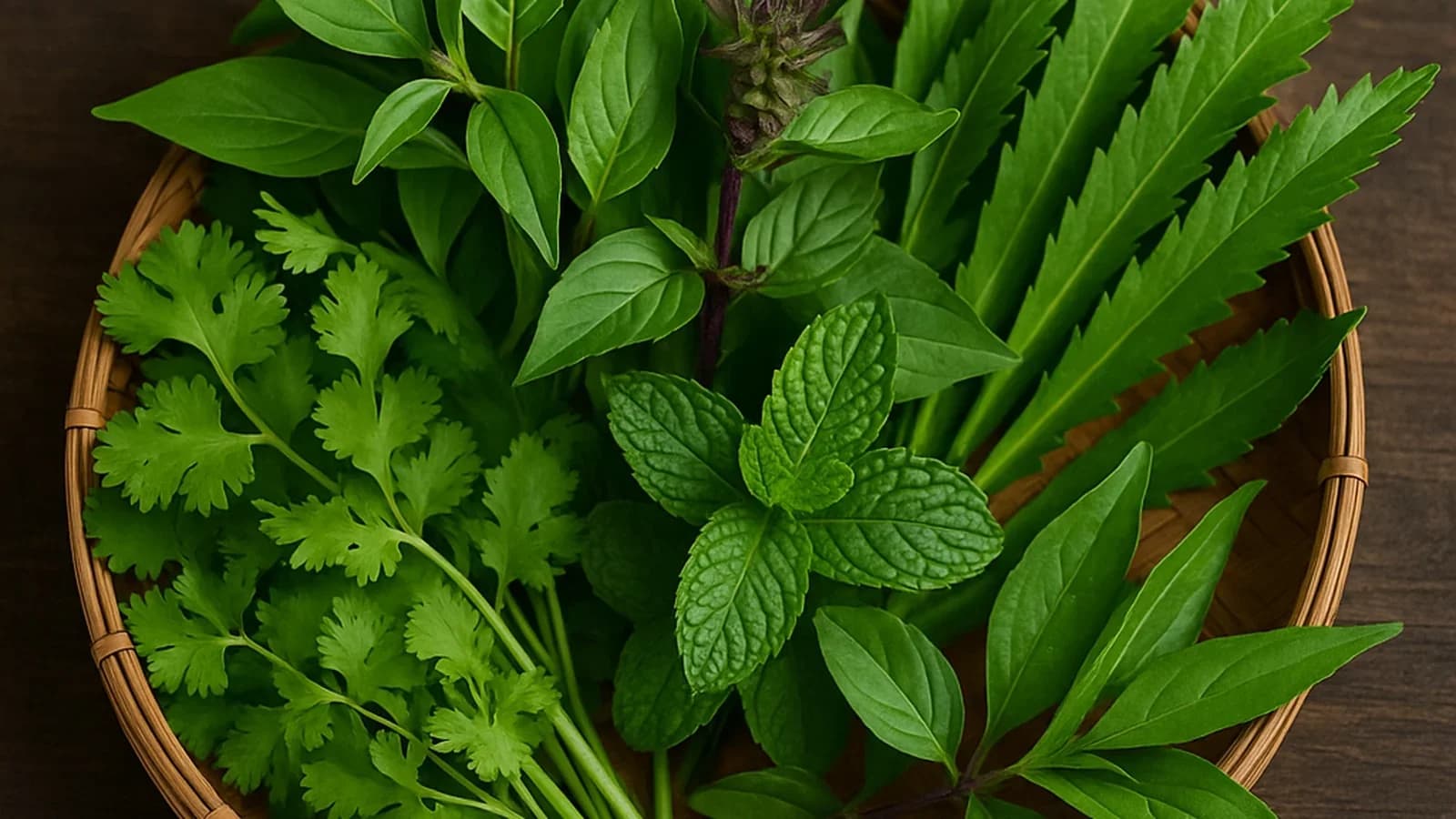
Appearance and Identification: Thai basil differs significantly from European basil. The leaves are narrower, greener, and characteristic purple flower calyces sit on the stems. The plant grows more compact and bushier than its European counterpart.
Flavour Profile: Thai basil offers an intense, slightly sweet aroma with pronounced anise flavour. The aroma is peppery and spicy at once – no comparison to milder European basil. In pho, it provides that distinctive note that makes the dish so unmistakable.
Health Benefits: Rich in antioxidants, vitamins A and K, and essential oils with anti-inflammatory properties. In traditional Vietnamese medicine, it is used to support digestion and relieve stomach discomfort.
When to Add: Thai basil in Vietnamese dishes is typically added just before serving to preserve its intense aroma. In pho, it is added raw over the hot broth, where it gently wilts and fully releases its aroma.
Coriander/Cilantro (Ngò Rí)
Taste and Characteristics: Fresh coriander is known for its citrusy, slightly bitter leaves. Some people perceive a soapy taste – a genetic phenomenon linked to a specific olfactory receptor. In Vietnamese cuisine, however, this taste is appreciated as essential and refreshing.
Nutritional Value: Coriander is low in calories but rich in vitamin K, important for bone health. It also contains vitamin A, C, and various minerals. The essential oils have antimicrobial and digestive-promoting properties.
Why It's Essential: Coriander is indispensable in Vietnamese cuisine. It is used as a garnish in pho, in spring rolls, on rice noodles, and in soups. It adds freshness to every dish and balances heavy flavours like beef and bone broth.
Vietnamese Mint (Rau Răm)
Unique Properties: Vietnamese mint (also called salad leaf mint) differs fundamentally from European mint or peppermint. The leaves are narrower, more elongated, and have a dark green edge. The aroma is fruitier and less cooling than European mint varieties.
Medicinal Uses: Traditionally used to treat stomach complaints, nausea, and dizziness. It also aids digestion and has mild fever-reducing properties.
Flavour Notes: The aroma is spicy, slightly sweet, with notes of green tea and lime. It is less intense than Thai basil but more present and aromatic than European mint.
Sawtooth Coriander (Ngò Gai)
Identification Tips: The name says it all – the leaves have jagged, saw-tooth-like edges. The leaves are narrower and longer than regular coriander, and the entire plant has a more intense aroma. The stems are thicker and woodier.
Culinary Uses: Sawtooth coriander is typically used in meat dishes, Vietnamese stir-fries, and clear soups. Its intense aroma works better with robustly flavoured dishes.
Taste Profile: It has a more intense, peppery flavour than regular coriander with slightly herbal and earthy notes. Some describe it as coriander-like with added complexity.
Bean Sprouts (Giá)
Freshness Indicators: Fresh bean sprouts should be crispy, white, and without dark discoloration. They should smell mild – an unpleasant or sour smell indicates spoilage. The shoots should still be green and not yellowed.
Texture and Use: Sprouts add crunch and fresh texture to many Vietnamese dishes. They are eaten raw, not cooked, to preserve their crispy consistency. In pho, they are traditionally served raw on the side.
Health Benefits: Bean sprouts are rich in proteins, vitamins, and minerals. They contain isoflavones with antioxidant properties. Being alive, they offer optimal bioavailability of nutrients.
Lime (Chanh)
Role in Vietnamese Cuisine: Lime is the acid of choice in Vietnam and plays a fundamental role in flavour balance. It is squeezed over pho, mixed into dipping sauces, and squeezed over nearly all summer rolls.
Acidity Balance: The lime's acidity balances the umami depth of bone broth and intense flavours. It brings brightness and freshness to otherwise heavy dishes and aids digestion of fatty foods.
Health Benefits of Vietnamese Herbs
Vietnamese herbs offer far more than just flavour. They are true superfood suppliers:
- Vitamins and Minerals: Particularly vitamins K, A, C, and various B vitamins. These support the immune system, bone health, and energy production.
- Antioxidants: Vietnamese herbs contain polyphenols and flavonoids that fight free radicals and slow cellular aging. This is particularly important for long-term health.
- Digestive Support: The essential oils in herbs like Thai basil and Vietnamese mint support stomach acid production and bile secretion, easing fat digestion.
- Anti-inflammatory: Many Vietnamese herbs have proven anti-inflammatory properties that can reduce chronic inflammation.
- Traditional Medicine: In Chinese and Vietnamese medicine, these herbs have been used for thousands of years to treat various ailments – from digestive problems to fever reduction.
How to Identify Fresh Herbs
Visual Indicators: Look for bright colours without yellowing or dark spots. Wilted or limp leaves are signs of older herbs. Stems should be firm and not woody.
Smell Test: Fresh herbs should smell intensely and pleasantly aromatic. A musty or unpleasant smell indicates decay. Take time to smell the herbs – the intense aroma is a sure sign of freshness.
Shopping Tips: Buy Vietnamese herbs in Asian markets, not regular supermarkets where they often aren't fresh enough. Buy them on the day of use or at most one day before. Avoid packages with condensation or mold.
Storage Tips
Refrigerator Method: Wrap herbs loosely in damp paper towels and store in an airtight plastic container. This keeps them fresh for 5-7 days. The paper towel absorbs moisture and prevents mold growth.
Water Glass Method: Place herbs with stems in a glass of water, like cut flowers. Loosely cover the leaves with a plastic bag. This method can maintain freshness for up to two weeks.
Freezing Method: Finely chopped herbs can be frozen in ice cube trays with water. This gives you pre-portioned herbs to add to dishes anytime – ideal for meal prep throughout the week.
Substitution Guide
Thai Basil: European basil is a weak substitute, but better than nothing. Use double the amount and add it later. Alternatively, you can add a drop of anise liqueur (pastis) to compensate for the missing anise flavour.
Coriander: Fresh parsley is a common substitute, but offers less flavour. Use more and combine with dill for added aroma. A hint of lemon juice can partially replace the missing citrus note.
Vietnamese Mint: Regular mint with a hint of basil is an acceptable substitute. The flavour combination resembles Vietnamese mint more than pure mint alone.
Bean Sprouts: Other fresh sprouts like mung bean sprouts work similarly and offer similar texture and nutrients.
Cultural Significance
In Vietnam, fresh herbs are not simply an ingredient – they are the heart of food culture. While European restaurants plate dishes on dishes, Vietnamese meals are presented as raw ingredients: the diner becomes the artist of their own meal. With pho and other Vietnamese dishes, you can choose the exact amount of herbs you prefer.
This philosophy reflects Vietnamese appreciation for freshness, individuality, and harmony. Herbs are not viewed as decoration but as equal partners to the protein, broth, and noodles. The balance between heat (chilli), acidity (lime), sweetness, and umami (broth) is achieved through the quantity and type of herbs used.
Historically, Vietnamese herbs were also important for food preservation and self-care medicine in rural areas. This tradition continues today – every family knows traditional herb mixtures for treating colds or stomach complaints.
Buying Vietnamese Herbs in Hamburg
Asian Markets: To find authentic Vietnamese herbs in Hamburg, it's worth visiting specialised Asian markets, particularly in districts like Wallgang area or streets between Hallerstraße and Billstraße. There you'll find fresh herbs at a fair price.
Shopping Tips: Visit early in the morning when deliveries arrive fresh. Talk to vendors – they often know specific growers and can help you find good quality. Ask about days when new goods arrive so you know when to get fresh herbs.
Online Options: Various online delivery services offer Vietnamese herbs, but quality varies. When possible, buy locally for better freshness and sustainability.
How to Use Vietnamese Herbs at Phở & Rice
The Classic Method: When you visit Phở & Rice, we serve a bowl with finely chopped Thai basil, coriander, Vietnamese mint, and bean sprouts. Following Vietnamese tradition, you take a small amount of herbs and add them directly to your hot pho broth. The aroma is released immediately and the taste becomes instantly more intense.
Experiment: Not everyone loves the same amount of herbs. Some guests add herbs generously, others prefer sparingly. There is no right or wrong way – follow your taste.
Flavour Tip: First try a spoonful of pho without herbs to taste the broth. Then gradually add herbs until you find the flavour combination you enjoy most.
Conclusion
Vietnamese herbs are the secret to authentic Vietnamese cuisine. They are more than just flavour enhancers – they are nutrient suppliers, cultural symbols, and expression of Vietnamese philosophy of freshness and balance. At Phở & Rice in Hamburg, we use only the highest-quality, freshest Vietnamese herbs to ensure you experience true Vietnamese cuisine. Whether you're cooking Vietnamese at home or visiting our restaurants – understand the importance of these wonderful ingredients and savour the flavours of Vietnam with every bite.